ctlawtribune.com


Liquor Law:
Trendowski & Allen

Dental Law:
Meehan, Meehan & Gavin

ERISA Law:
Moukawsher & Walsh

Western Massachusetts

Alekman DiTusa

Business Litigation:
Hurwitz, Sagarin, Slossberg & Knuff LLC

Securities Arbitration:
Law Offices of Howard Rosenfield

Professional Responsibility Law:
Howard, Kohn, Sprague & Fitzgerald

Litigation:
Stanger & Arnold
info@stangerlaw.com

Immigration Law:
Leete Kosto & Wizner LLC

Child Sexual Abuse Defense:
Law Offices of Damon Kirschbaum

Monday, October 12, 2009

Images

Hollister_Timothy_101209
Gary Lewis
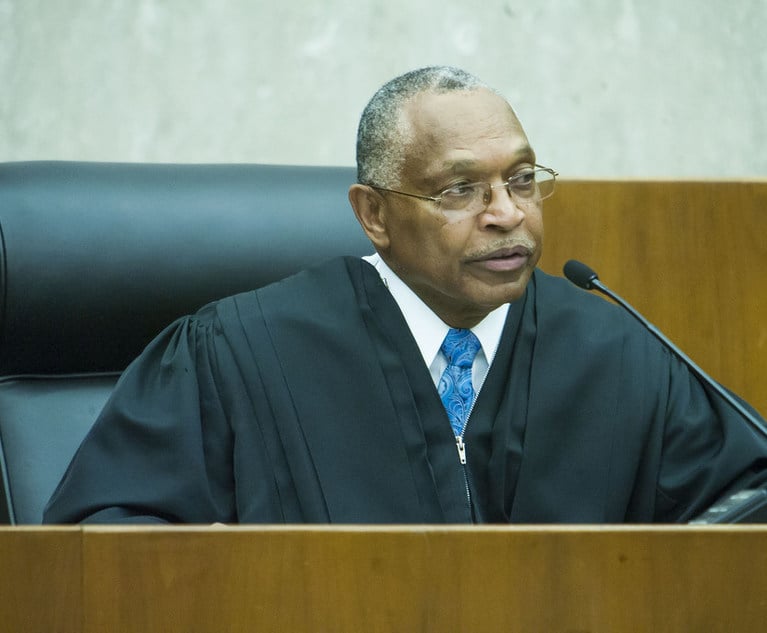
Attorney Timothy Hollister lost his 17-year-old son, Reid, to a car accident in 2006 and now works to educate teenagers and parents about the risks involved in driving. He’s launched a new blog at www.fromreidsdad.org.

From Mourning Comes A Father’s Message

Blog reveals lawyer’s loss and offers warning about teen driving dangers

Attorney Timothy Hollister was in Washington, D.C., on business when he got the call from his wife Ellen just before midnight. Their 17-year-old son, Reid, had just slammed the family’s Volvo into a guardrail going too fast around a curve on Interstate 84 near Plainville.

He hung up the phone on that December night in 2006 and forced the worst thoughts out of his mind. Traffic on I-95 was moving quickly, and Hollister put miles of road behind him without slowing down.

He called at the top of every hour to get updates from Ellen, but sometime in the early morning he heard from a relative that she was in the bathroom and “not doing well.”

He stopped calling and focused on the drive.

After about five hours, Hollister whipped into the parking lot of Hartford Hospital and rushed in where family members were waiting.

Reid had died two hours earlier. “I was consumed by grief for about a year after that,” said Hollister, who practices land use and environmental law at Shipman & Goodwin.

He also spent that time turning over in his mind all of the possibilities of the night of the accident and what he could have done differently as a parent. What he soon realized was that there are dangers involved with teen driving that parents like him aren’t always aware of when they give car keys to their 16-year-olds.

His instrument to share that information is a blog he launched last week at www.fromreidsdad.org.

“I’m sending out warnings that I don’t see made adequately elsewhere,” Hollister said last week. “I’m not trying to tell parents how to raise their kids, but I want to get information out there so people can make better informed decisions.”

Hollister’s awareness of teen driving issues was enhanced by his participation in Gov. M. Jodi Rell’s Task Force On Teen Safe Driving, established in 2007. The group’s work led to passage of stricter driving laws in the state for teens, including an 11 p.m. curfew for 16- and 17-year-old drivers and enhanced fines and suspensions for teen drivers who are ticketed for speeding or using a cell phone while driving. There’s also a restriction on the type of passenger a new driver can transport within the first six months of having a driver’s license.

And requirements for on-the-road training for new drivers have increased from 20 to 40 hours.

Hollister’s early blog entries have focused on telling his personal story of tragedy and discussing one point that cannot be addressed by any laws.

“Even if you complete all of the [driver] training and follow all of the rules, teen drivers are still at risk because they don’t have enough driving experience to develop that good judgment that can keep them from getting into bad situations,” Hollister said. “You just can’t teach that.”

Hollister said that’s why it’s important for parents to weigh all of the concerns about teen driving and not automatically hand over the keys when a child turns 16. Hollister said he was like a lot of parents who are proud of their children’s milestones and also relieved when children don’t have to be shuttled around to activities.

“The convenience of having another driver in the house sometimes overwhelms other decisions that parents can make,” he said. “Don’t let convenience and pride blind you to the dangers.”

Improvements Made

Based on data Hollister collected during his work on the task force, about 6,000 teen drivers die in car crashes each year nationally and another 400,000 are seriously hurt. Hollister said that equates to about a one in 1,500 chance of death for teen drivers and one in 14 chance of a serious injury based on a count of about 9 million teen drivers in the country.

This summer, the state Department of Motor Vehicles reported that the new driving laws have made an impact. Between August 2007 and June 2009, speeding convictions among 16- and 17-year-old drivers dropped 43 percent, while convictions for driving while using a cell phone dropped 51 percent.

Teen driving fatalities statewide also are on the decline, from 17 during the calendar year of 2007 to 14 during 2008. “I think these improvements are coming in part because parents, teens, police and others are sending the message that teen safe driving is a priority,” DMV Commissioner Robert M. Ward said. “It’s been a collective effort at overall education, awareness and enforcement.”

For Hollister, his teen driving blog became a priority when he found no such blog written by a parent who has lost a teenage child in a traffic accident. He also speaks about teen driving at schools as part of the state-based Mourning Parents Act group.

“Maybe it takes a bereaved parent to speak to the level of danger that comes with teen driving and to be able to deliver that message with conviction,” he said.

Hollister plans to post new articles on his blog every couple of weeks and has outlined a future schedule of topics for the next 16 posts. These include the difference between “purposeful” and “recreational” driving; factors that enhance the risk of teenage driving; how to negotiate a parent-teen driving contract; and how to manage nighttime curfews and exceptions, among many other topics.

With regard to the new laws the state passed last year, “I’m satisfied that Connecticut has made good changes and the laws will work well,” he said.

Hollister has resolved in his mind that there was nothing negligent about the way he and Ellen handled Reid’s driving privileges, and there were no drugs or alcohol involved in the accident. But if the current laws had been in place, Reid’s accident wouldn’t have happened that night because his license would have been suspended for two previous speeding tickets he received while driving on local streets.

Hollister said the final two years of Reid’s life were challenging because of typical head-butting between parents and teenage child. Even so, Hollister and his son still found time to go bowling together like they had for years, and Hollister recognized that their relationship was starting to improve as Reid became a more confident young man.

Hollister suspected that Reid would emerge from his growing pains by the spring of 2007, but a car ride changed all of that.

Now Hollister wonders what today might be like if he had known in 2006 what he knows now. “Wrestling with myself over that is probably something I’ll do for the rest of my life,” he said. •

 |  About Law.com  |  Customer Support  |  Reprints  |  Privacy Policy  |  Terms & Conditions
 |  Copyright 2009. ALM Media Properties, LLC. All rights reserved.