Images

Johnathon Henninger
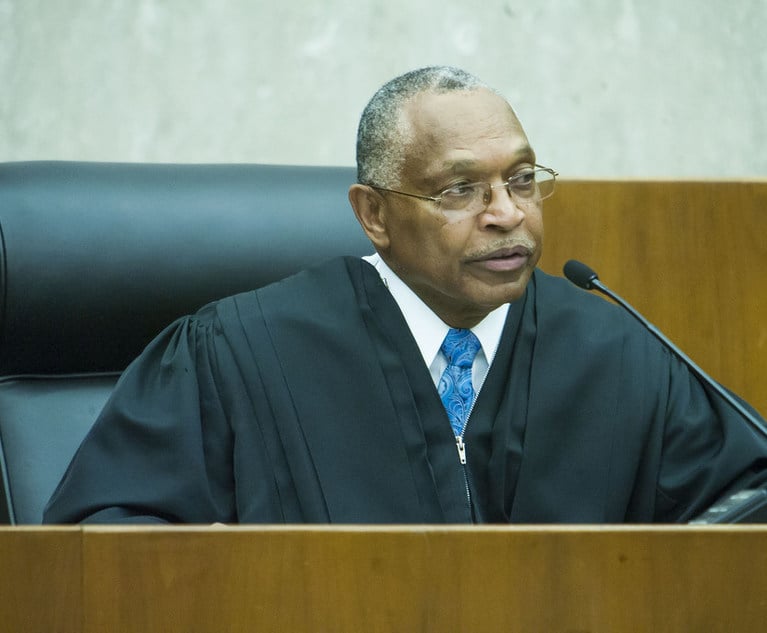
Husband-and-wife attorneys Robert Carter and Donnal Civitello have succeeded in getting the state Supreme Court to rethink its position on workers’ comp issues at least three times in the past decade or so.
Teaching The Justices About Workers’ Comp
Robert Carter and Donna Civitello are the go-to couple on ‘arcane’ topic
By THOMAS B. SCHEFFEY
Robert H. Carter was born in Nashville, Tenn., and his relaxed, gentle lilt belies a steely intellect.
He came to New England to partake of some of its top educational resources – Harvard undergrad, Yale for a master’s and law degree. As an editor of the Yale Law Journal, he distinguished himself enough to be considered for a clerkship with U.S. Supreme Court Justice Hugo Black. He later taught law at the University of Connecticut and studied medicine for two years there.
Since then, he’s become a kind of Red Adair for the law of workers’ compensation; just as the famous firefighter who figures how to extinguish stubborn blazes, Carter is the one to call when a worker’s comp court ruling creates a seemingly unfixable problem.
Not just once, but three times over the past 15 years, he and Donna Civitello, his law (and life) partner, have brought bad decisions back from the dead at the state Supreme Court level. That’s almost unheard of. After the high court has ruled, motions for reconsideration are almost never granted. Even rarer is a vote reversal by every member of the Supreme Court panel.
One of the major state Supreme Court cases of 2008 was Pelletier v. Sordoni-Skanska. Daniel J. Krisch, of the Hartford firm of Horton, Shields & Knox won a defense verdict, overturning a $41 million award to a construction worker who had been injured in an on-the-job accident.
Earlier in the hard-fought case, Norman Pelletier was told he could not, as a subcontractor’s employee, sue the general contractor for tort negligence. But in a friend of the court brief, Carter and Civitello argued that a state statute passed in the wake of the L’Ambiance Plaza construction disaster, which killed 28 workers in Bridgeport in 1987, did give Pelletier that right. In 2003, the state Supreme Court overturned an Appellate Court decision and allowed the lawsuit to continue. Pelletier’s defeat this year turned on whether the contractor or subcontractor was responsible for certain safety inspections.
“The second Pelletier ruling doesn’t disturb the basic law,” said Carter, “which is to aid workplace safety by making the general contractor responsible for its actions.”
Because of their expertise, Carter and Civitello and a trio of distinguished workers’ comp defense lawyers this year co-authored “Workers’ Compensation Law of Connecticut,” in the West Practice Series.
“Now as we’re getting older, and someday will leave the practice, we want to make sure that [worker’s comp law] isn’t all messed up,” said Civitello. “People don’t read the old cases, and a lot of people forget what the law is.”
Fairly Informal
When Donna Civitello graduated from Yale, she thought she was going to become a labor lawyer, and for experience took an assembly line job at a Danbury printing plant. She wound up badly injured, and her mother located a top-notch attorney to press her product liability and workers’ comp claims – Robert Carter.
She used her settlement to pay for law school at UConn. Carter offered her a partnership job right out of school, and the two eventually married in 1999.
Though they are known best for their influence on Supreme Court decisions, most of Carter and Civitello’s work takes place out of court and before the state Workers’ Compensation Commission. The commission’s proceedings are less structured than court proceedings, and so there’s no by-the-numbers approach for attorneys to follow.
“So much of workers’ comp is informal. A lot of times people don’t pay attention to the actual law so much,” Carter said.
That can cause some confusion when workers’ comp cases get appealed into the mainstream court system. “Justice [David] Borden talked with us this year at the bar association,” recalled Civitello, “and said they just had no experience with workers’ comp before they became judges, so they need assistance.”
Said Carter: “A lot of the stuff is fairly arcane. We’ve been happy to be able to kind of help them out.”
One such instance occurred in 2001, when Enfield correctional officer Derrick Gartrell sought compensation for a pre-existing heart condition that was aggravated due to psychological factors. Some of the incidents that led to his post-traumatic stress diagnosis took place at home and other sources of aggravation came from the workplace.
The original decision limited Gartrell’s recovery to the aggravation resulting from workplace sources. After Carter and Civitello won a reargument, the Supreme Court reversed itself and ruled that Gartrell’s should be able to collect full benefits.
“The law has been in force for almost 100 years, that the employer takes the employee as he finds him,” said Carter. “If the injury is made worse by work, then the employer has to pay for the treatment, and not just half or a third of the treatment.”
In 1996, the case of Williams v. Best Cleaners introduced a troublingly legal concept for the husband-and-wife team. A lower court ruling pronounced that “disability under the workers’ comp act should only be measured by loss of earning capacity,” Carter said. “In fact the act is a lot more complicated than that. You could have your finger cut off and not lose earning capacity, but you have a disability.”
Carter said both the plaintiffs and defense lawyers were in agreement in the Williams case that all workers who sustain disabling injuries should be able to make claims. Carter wrote the amicus brief on the behalf of the Connecticut Bar Association, which ordinarily can’t take sides. “For a variety of reasons under the statute, this needed to be fixed,” said Carter. The Supreme Court “was gracious enough to fix it.”
The couples’ latest project is the case of Marandino v. Prometheus Cleaners, in which the Supreme Court will consider whether an injured worker can first claim a permanent partial disability for one injury, and then later apply for total disability if the injury worsens or a second one occurs. “The legal answer is, sure you can,” Carter says. “It’s important that they not get it wrong…
“But,” said Carter with a patient air, “we’ll wait and see.”•