ctlawtribune.com


Liquor Law:
Trendowski & Allen

Dental Law:
Meehan, Meehan & Gavin

ERISA Law:
Moukawsher & Walsh

Western Massachusetts

Alekman DiTusa

Business Litigation:
Hurwitz, Sagarin, Slossberg & Knuff LLC

Securities Arbitration:
Law Offices of Howard Rosenfield

Professional Responsibility Law:
Howard, Kohn, Sprague & Fitzgerald

Litigation:
Stanger & Arnold
info@stangerlaw.com

Immigration Law:
Leete Kosto & Wizner LLC

Child Sexual Abuse Defense:
Law Offices of Damon Kirschbaum

Monday, December 21, 2009

Images

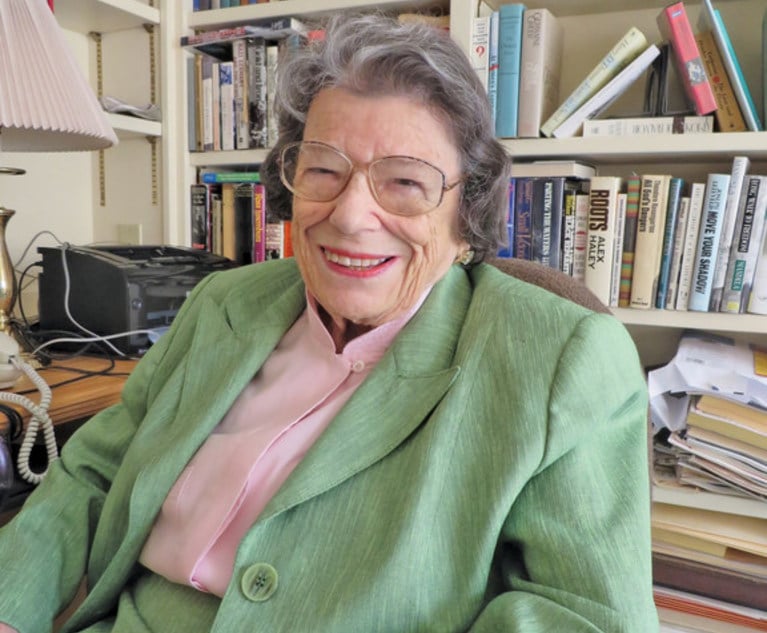
Torre_Karen_122109
Autumn Pinette
New Haven civil rights lawyer Karen Lee Torre said when she first got involved with the New Haven firefighters’ promotions dispute in 2003, she thought the case would be settled before going to court.

A Long Journey To A Landmark Decision

Karen Lee Torre and 20 firefighters sparked a debate about race, civil rights

Karen Lee Torre never aspired to bring a case to the U.S. Supreme Court. She never anticipated being recognized by strangers on the street or in the grocery store. But after a six-year battle with the city of New Haven over firefighter promotions, she got just that this year.

Torre led the plaintiffs’ charge in the high-profile case of Ricci v. DeStefano, which was argued before the U.S. Supreme Court in April. Her 20 firefighter clients, all but one of whom were white, made reverse discrimination claims after being denied promotions to lieutenant and captain. The city tossed out the results of a 2003 promotions test because too few black firefighters scored high enough and the city feared a civil rights lawsuit.

This summer, the justices decided that the firefighters had been wronged, and the Supreme Court ordered the firefighters be promoted. The Ricci decision has led to promotions for firefighters in similar situations in places such as Memphis, Tenn., Cleveland, and towns in New York and New Jersey, as well as in Bridgeport.

All of it has been a whirlwind experience for Torre, a civil rights attorney since 1985, as she and her clients became the center of attention in a debate about race and civil rights in America. There have been national television appearances on Fox News Channel and interview requests from media outlets around the country.

“This year has been the most incredible year of my career,” Torre said last week. “Nothing in the past compares to it and nothing in the future will compare to it.”

Larger Stage

And it had been a long time coming. Torre took the case in 2003, and it was her first reverse discrimination matter. At the time, she believed the dispute over promotions would be settled during a meeting with New Haven’s Civil Service Commission, which administered the test. When it wasn’t, she filed suit in federal court, and the case was dismissed on summary judgment in 2006.

That’s when Torre believed Ricci deserved a much larger stage.

“I addressed the group of firefighters and told them that I thought this case had the makings of a Supreme Court landmark,” Torre said. “I told them that I couldn’t guarantee anything, but I encouraged them to not accept [the ruling].”

By pushing forward with appeals, “There was a sense that we wanted to do something greater than ourselves,” Torre said.

The plaintiffs remained undeterred even after an initial setback with the 2nd Circuit Court of Appeals, and once Torre decided to petition the Supreme Court, she contacted the Austin, Texas, firm of Yetter, Warden & Coleman, known for a thriving appellate practice, for assistance.

“It’s amazing how tenacious she is in the way she is able to keep after an idea and a principle and make that come across to a court,” said Ryan P. Bates, an associate of the Texas firm. “That tenacity comes across in her loyalty to her clients.”

National interest in the case built steadily leading up to the argument in April, and Torre said she was “stunned” by the attention. She had been immersed in the legal details of the process and hadn’t looked at the case from afar.

“I knew there would be a fierce reaction and the case would garner publicity, but I wasn’t attuned to just how much the country was interested in the case,” she said.

She recalls seeing the faces of prominent political commentators and public officials interspersed with firefighters in the Supreme Court chambers. After the argument, media outlets swarmed Torre and her clients outside and members of the public were asking for her autograph. These days, she says, people stop her in the grocery store or outside the doctor’s office asking if she’s “the lawyer for those firefighters.”

New Direction

Following the Ricci decision, Torre says she has received numerous job offers asking her to become a lobbyist or a spokesperson for special interest groups. While she has turned down those offers, she has agreed to be a consultant on about a half-dozen cases around the country involving claims of reverse discrimination.

At the same time, litigating Ricci has worn down Torre to the point that she is going into semi-retirement for the time being.

Ricci was a fabulous experience and my most personally rewarding experience,” she said. “But it made me want to leave the practice of law, and I don’t know what’s next.”

Part of that feeling comes from the battle that continues over Ricci with groups of black firefighters attempting to halt promotions on grounds that doing so would be a form of discrimination.

But earlier this month, she attended the festive badge ceremony where her clients received their promotions, and the importance of her work again was apparent.

“It was emotional,” Torre said of the festivities, “and I sat there and watched like a proud mama.” •

 |  About Law.com  |  Customer Support  |  Reprints  |  Privacy Policy  |  Terms & Conditions
 |  Copyright 2009. ALM Media Properties, LLC. All rights reserved.