ctlawtribune.com


Liquor Law:
Trendowski & Allen

Dental Law:
Meehan, Meehan & Gavin

ERISA Law:
Moukawsher & Walsh

Western Massachusetts

Alekman DiTusa

Business Litigation:
Hurwitz, Sagarin, Slossberg & Knuff LLC

Securities Arbitration:
Law Offices of Howard Rosenfield

Professional Responsibility Law:
Howard, Kohn, Sprague & Fitzgerald

Litigation:
Stanger & Arnold
info@stangerlaw.com

Immigration Law:
Leete Kosto & Wizner LLC

Child Sexual Abuse Defense:
Law Offices of Damon Kirschbaum

Monday, November 17, 2008

Images

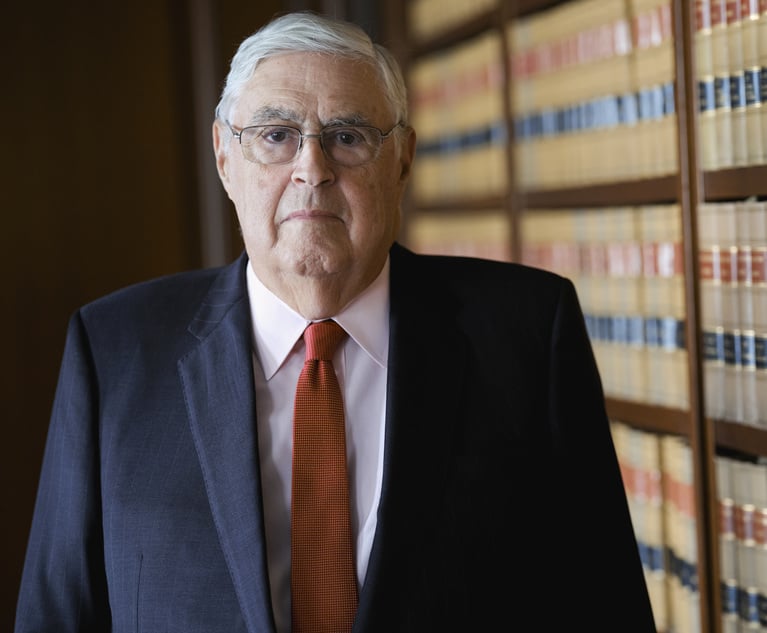
Greg Coleman 111708
Contributed Photo
Texas attorney Gregory Coleman is assisting New Haven firefighters who claim they are victims of reverse discrimination. He said the case appealed to him “because it’s an issue of how you achieve equality and justice in society.”
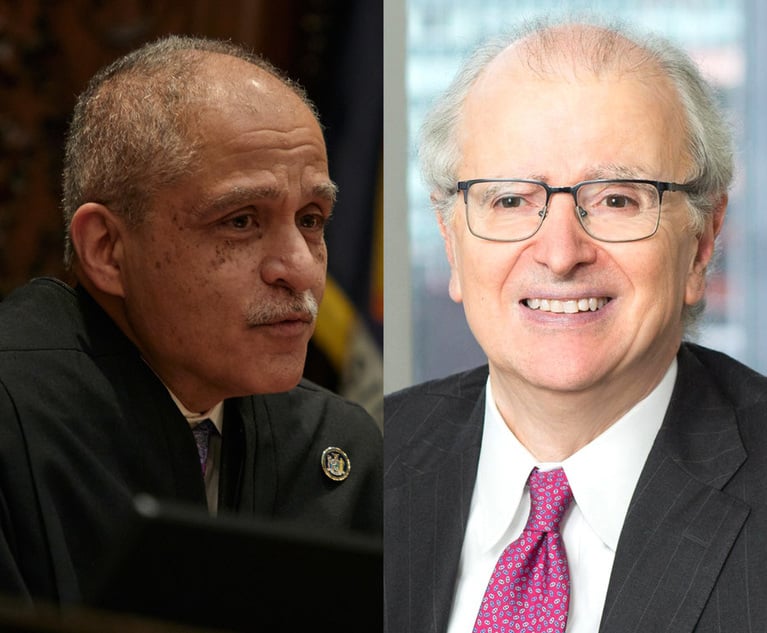
Christopher Meade 111708
Contributed Photo
Christopher Meade, who practices in the New York office of WilmerHale, is representing the city of New Haven on a pro bono basis. He was working on briefs last week arguing against a Supreme Court review of the case.

New Haven Firefighters’ Case Draws National Interest

A group of 20 New Haven firefighters are pushing to have the nation’s highest court determine if the city discriminated against them when it denied promotions despite high test scores. For some of the men, the U.S. Supreme Court’s decision on whether to hear their case will determine whether the firefighters remain in what they believe to be dead-end jobs due to their skin color.

After a divided Second Circuit this summer turned down the firefighters’ appeal, national law firms and advocacy groups have lined up to assist the New Haven parties on both sides.

The plaintiff firefighters in Ricci v. DeStefano allege that they are victims of a system that was changed in midstream to favor black firefighters over white and Hispanic ones and that they have been blocked from attaining fire lieutenant and captaincy ranks. In 2004, the city of New Haven told its Civil Service Commission to stop administering two written exams that were used to determine the most qualified candidates for promotion because too few minority candidates were advancing. City officials feared a lawsuit would be filed by minorities under the federal Civil Rights Act.

But instead the lawsuit came from 19 white firefighters and one Hispanic firefighter who alleged that they were wrongfully denied opportunities for promotion. The 20 firefighters had taken the test before it was discontinued, but their results were not certified.

The arguments on both sides underscore the debate about who is more affected by the exam: minorities who don’t score high enough to get promoted or the people in the majority who score high but don’t get promoted. The exam was designed to be race-neutral, and the highest test scores were attained mainly by white firefighters.

The case “raises pretty important and unsettled issues about what state and local governments can do when they give a Civil Service exam and are faced with results that would have disparate racial impact under Title VII,” said Jon Bauer, who teaches discrimination law at the University of Connecticut School of Law. “There’s an argument to be made that this could come up with more frequency and some clarification could be useful.”

Help From Texas

New Haven solo attorney Karen Lee Torre, who is a Law Tribune columnist, serves as lead plaintiffs’ counsel in the case, and she has recruited Yetter, Warden & Coleman in Austin, Tex., to assist her.

“The core American value of equal opportunity and earning success on merit has been completely upended to mean equal results and entitlements based on race,” Torre said.

Yetter, Warden partners Gregory Coleman and Edward Dawson and associate Ryan Bates compose the legal team from Texas. Their firm primarily handles business and technology litigation but has a history of taking public interest cases on a pro bono basis.

Coleman has argued several times in front of the U.S. Supreme Court since 2000 and has another petition pending before the court challenging the renewal of the Voting Rights Act.

Coleman said the firm didn’t join the Ricci case as pro bono counsel, but “there’s really no compensation unless we’re victorious.”

He noted that it was important to take the Ricci case “because it’s an issue of how you achieve equality and justice in society,” said Coleman. “Do you ask people to bear the burden of reverse discrimination? If discrimination is wrong, then discrimination is wrong.”

Plaintiffs also are supported by amici briefs from the California-based American Civil Rights Institute, the Center for Individual Rights of Washington, D.C., and the Center for Equal Opportunity in Virginia. The Center for Individual Rights was involved in the 1997 lawsuit, Grutter v. Bollinger, that came before the U.S. Supreme Court challenging the University of Michigan Law School’s affirmative action admissions policy. The court upheld the policy in 2003.

Meanwhile, the city of New Haven has retained WilmerHale, the powerhouse law firm based in Boston. One of the firm’s New York-based lawyers, Christopher Meade, is handling the case pro bono. His briefs in opposition to the petition calling for Supreme Court review were due at the end of last week, and he didn’t return telephone calls seeking comment. But city officials have argued that their decision not to certify the firefighters’ test results was mandated by Title VII anti-discrimination laws and their good faith belief that they can’t be liable for attempting to comply with the statute.

‘Worthy Of Review’

In 2006, Connecticut U.S. District Judge Janet Bond Arterton threw out the firefighters’ claims, leading to Torre’s appeal to the Second Circuit the following year. A three-judge panel denied the firefighters’ appeal, and then in June the court, in a 7-6 vote, narrowly denied an en banc rehearing of the case.

Second Circuit Judge José Cabranes and five colleagues wrote a dissenting opinion stating their belief that the firefighters’ case is “worthy of review” by the Supreme Court.

Cabranes stated that it is his “hope that the Supreme Court will resolve the issues of great significance raised by this case.”

As the plaintiffs await word on their Supreme Court petition, which is expected to come in December, Torre said her clients are hanging on to their last hopes for advancement opportunities on the job.

The four-year legal battle has had a negative impact on the fire department’s morale, Torre said, and some of her clients have strongly considered leaving the profession because of their anger and bitterness.

For now, they all remain New Haven firefighters. “If there’s no resolution, it may drive them out,” Torre said. “They are the best and brightest and that would be a huge loss to the public.”•

 |  About Law.com  |  Customer Support  |  Reprints  |  Privacy Policy  |  Terms & Conditions
 |  Copyright 2009. ALM Media Properties, LLC. All rights reserved.