Images

Contributed Photo
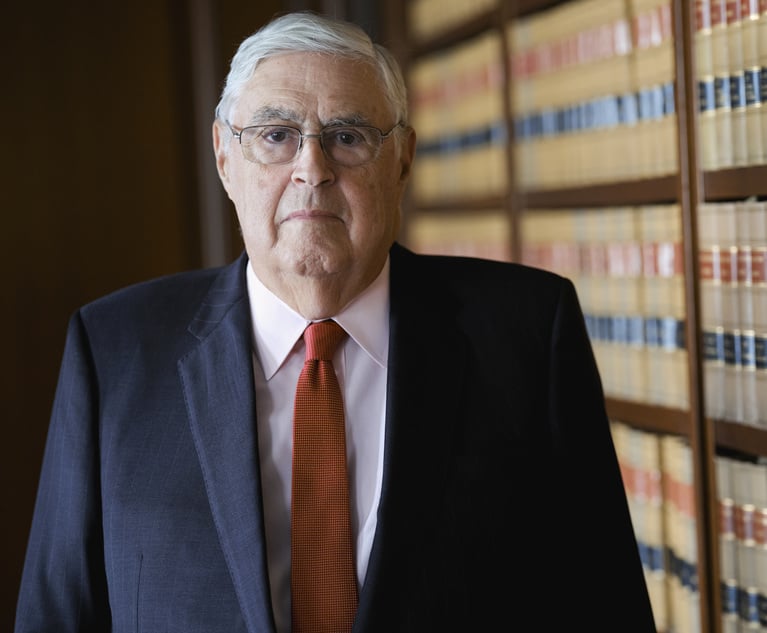
Judge Robert L. Krechevsky died this month at age 86 after 30 years on the Connecticut Bankruptcy District Court.
Making Bankruptcy Court ‘A Better Place’
Judge Krechevsky treated debtors, lawyers with same respect
By CHRISTIAN NOLAN
How long had Robert L. Krechevsky served on the Connecticut Bankruptcy District Court? He was appointed by President Jimmy Carter in 1978 and had presided over an estimated 40,000 cases before leaving in August of this past year.
But what set “Bob” Krechevsky apart was not his longevity, but his compassion for and patience with anyone who stepped into his Hartford courtroom. Krechevsky, who was the first chief judge of the Connecticut Bankruptcy District court, died earlier this month at age 86.
“Everyone who appeared before him would tell you he was fair, attentive and courteous to counsel and the public,” said David M.S. Shaiken, of Hartford’s Reid and Riege. “The bar and the community are going to miss him dearly.”
Shaiken first encountered Krechevsky when the judge was an adjunct law professor at the University of Connecticut School of Law. Shaiken recalls that, despite Krechevsky’s many years of experience, he would frequently look up sections of the bankruptcy code during classroom discussions. That lesson stayed with Shaiken. “No matter how much you know, you’ve got to take a look at the statute,” he said.
Following his graduation in 1987, Shaiken clerked for Krechevsky for two years. While Krechevsky had high expectations, Shaiken said, he was also patient with the clerks, knowing that they would make mistakes while honing their craft.
What did Shaiken learned during his clerkship? “He taught me to think the best of people until you had a reason not to,” Shaiken said. “That was a life lesson for me.”
After his clerkship, Shaiken appeared before the judge on numerous occasions. “I’ve met a lot of smart people in my life. He was really smart,” Shaiken said. “People just loved the guy. They didn’t just like him. There was a lot of respect for him.”
Veteran To Valedictorian
That respect was apparent Nov. 9 at a funeral service attended by hundreds of people at Congregation Beth Israel in West Hartford, the town where Krechevsky served as a councilman from 1961 to 1971, including a stint as deputy mayor.
Krechevsky is a 1943 graduate of Yale University. He then served three years in the Army Air Corps during World War II. Before he became a bankruptcy judge, Krechevsky helped launch a law firm, Gould, Killian & Krechevsky, in the late 1940s.
Among those speaking at his funeral was the current chief judge of the Connecticut bankruptcy district. Judge Albert S. Dabrowski recalled something he was told by one of Krechevsky’s law school classmates and early law partners, Robert Killian.
It seems that Krechevsky “showed up two months late for [law school] classes as he was late getting out of the Army. Nevertheless by the end of the first semester, Bob was already number one in the class, and ultimately Bob graduated as valedictorian.”
In an interview, Dabrowski had high praise for Krechevsky’s work on the bench. “My decisions and conduct have been and will continue to be informed and greatly influenced by his fine example. I am a better judge, and the federal court is a far better place, because of Robert Krechevsky,” Dabrowski said.
Dabrowski is the one who estimated that Krechevsky presided over 40,000 bankruptcy cases during his career. The most notable was Colonial Realty, which during the 1980s bought apartment complexes and shopping malls throughout the state through limited partnerships that promised profits of 300 percent.
When Colonial was forced into bankruptcy in 1990, lawyers for investors charged that Colonial did little more than operate a scheme in which real-estate deals were mainly a vehicle for the company’s partners to raise cash from banks and individuals.
It turned into Connecticut’s largest and most complicated bankruptcy case, with nearly 2,000 proceedings before $130 million was returned to investors
But Krechevsky brought the same level of care to small cases as big ones. Robert Kaelin, chair of the Connecticut Bar Association’s Commercial Law and Bankruptcy Section, remembers watching Krechevsky soothe the nerves of a pro se litigant who appeared visibly intimidated in the courtroom. “He was compassionate, helpful to him. That’s just the way he was,” said Kaelin.
“He was an extremely patient and respectful judge to all who appeared before him and treated them all the same whether it was the pro se debtor or the highly recognized bankruptcy lawyer.”•