ctlawtribune.com


Liquor Law:
Trendowski & Allen

Dental Law:
Meehan, Meehan & Gavin

ERISA Law:
Moukawsher & Walsh

Medicare Set-Aside

Angelo Paul Sevarino, Esq.

Immigration Law:
Barr & LaCava

Securities Arbitration:
Law Offices of Howard Rosenfield

Professional Responsibility Law:
Howard, Kohn, Sprague & Fitzgerald

Litigation:
Stanger & Arnold
info@stangerlaw.com

Immigration Law:
Leete Kosto & Wizner LLC

Monday, January 26, 2009

Images

Nancy Kulesa 012609
Contributed Photo
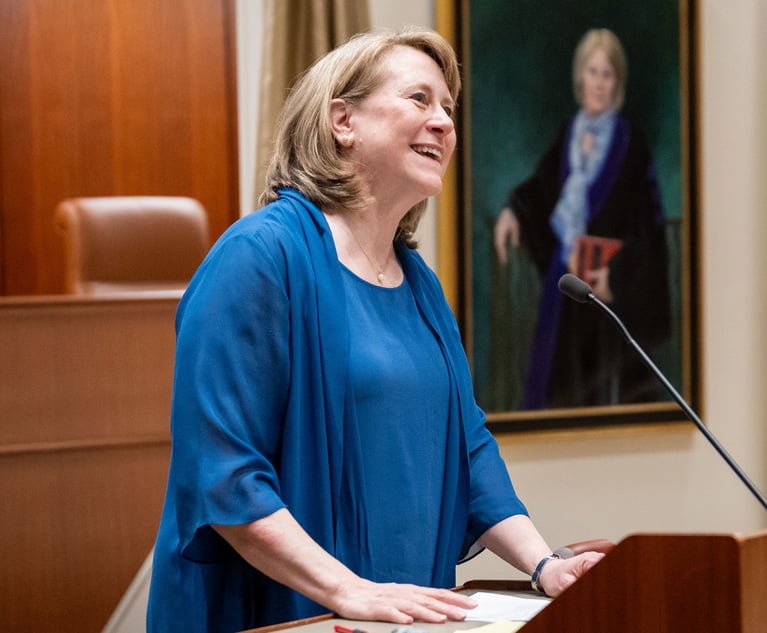
Izard Nobel attorney Nancy Kulesa of Hartford served as local counsel for the lead plaintiffs against Xerox. She was one of nearly 115 attorneys who filed appearances for either the plaintiffs or the defendants in case that was filed in August 2000.

Windfall Fees Come After Lengthy Battle

Conn. firms to get piece of $120 million from securities case settlement

The final touches had been placed on one of the top securities fraud settlements in American history, but there was still one major bone of contention—how much would the plaintiffs’ attorneys receive?

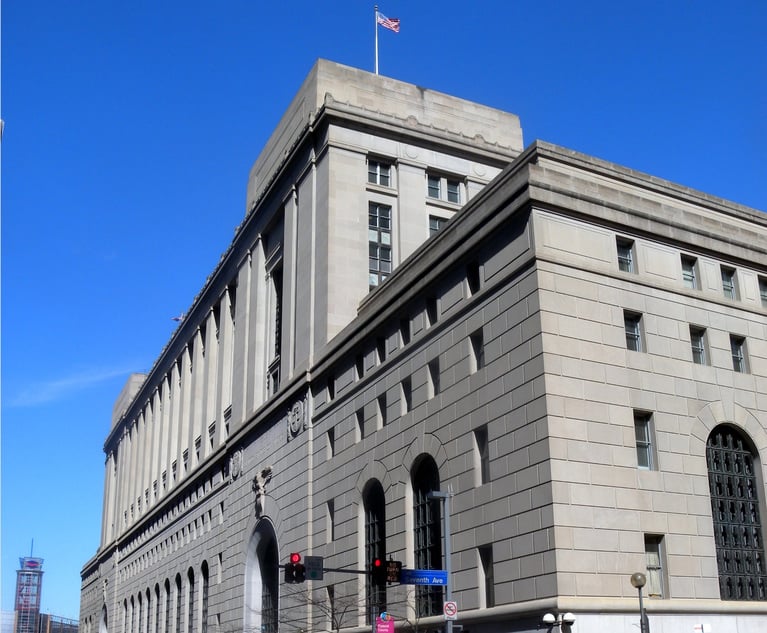
That issue was settled on Jan. 14 by Judge Alvin W. Thompson in the U.S. District Court in Hartford when he awarded $120 million in attorneys’ fees, plus $3.3 million in costs, in Carlson v. Xerox.

The fees and costs are part of a $750 million settlement that Xerox, the Norwalk-based digital printer and document management company, agreed to pay to investors while facing allegations that the company overstated earnings from 1997 to 2001.

“This is one of the biggest settlements that any law firm has ever seen,” said Brad N. Friedman, partner of Milberg LLP in New York, which was co-lead counsel in the case.

In fact, the class action suit settlement ranks 10th all-time since the Private Securities Litigation Reform Act was passed in 1995, according to retired federal Judge Alfred M. Wolin, who argued in September that the lead counsel for plaintiffs were due a larger cut of the settlement.

Plaintiffs’ counsel were initially seeking a 20 percent cut of the settlement. Still, their ultimate 16 percent take was the largest in the top 10, and their $120 million chunk was second largest in that same group. Xerox is expected to pay out the settlement in five installments throughout the year.

Friedman has seen his share of large securities settlements. He and his firm were lead counsel in Enron’s $7.2 billion settlement and Tyco’s $3.2 billion settlement, which rank first and third on the list, respectively.

“The fees as a percentage [in the Xerox case] were fair,” Friedman said. “It’s a big fee, but it’s a big case. This case was as difficult a case as you could have.”

There was dissent from Xerox’s lawyers during a hearing in October. They argued that contract attorneys were hired by plaintiffs’ counsel and paid $55 an hour but that their hours were included in the fee request at $300 an hour. These were attorneys hired specifically for this case for a temporary amount of time, and Judge Thompson determined that the plaintiffs’ counsel’s calculations were fair.

Ultimately, the court determines attorneys’ fees based on the number of billable hours multiplied by an appropriate rate. The court may increase that figure, known as the lodestar, by applying a multiplier based on factors such as risk of litigation and attorney performance.

Glen DeValerio of Berman DeValerio in Boston, which also served as co-lead counsel, said all of the contract attorneys were based in the United States and were thoroughly vetted before being hired. Johnson & Perkinson of South Burlington, Vt., also was co-lead counsel.

Connecticut Ties

The case required assistance from Connecticut firms, too, and they’re in line to get a slice of the pie even if they dropped out of the case shortly after it was filed in August 2000, as some of them did. Hartford class action firm Izard Nobel, which represents investors and employees in actions against corporations, served as local counsel and was knee-deep in the case that included a total of nearly 291,000 billable hours (the equivalent of 33 years) and 4 million document pages reviewed by the plaintiffs.

“We were involved in the day-to-day filings and discovery,” said Nancy A. Kulesa of Izard Nobel. “It’s obviously a very large settlement. I think it’s a good result for the class. We’re happy with it.”

Kulesa’s firm also is no stranger to such high-stakes work. They represented investors in a securities case against HealthSouth that settled in Alabama federal court for $445 million last year.

“This is the largest case we’ve been lead counsel in,” said DeValerio of Berman DeValerio in Boston. “A case like this is a massive undertaking.”

DeValerio said his firm fronted $4 million out of pocket to fund the litigation and at its height had about 60 of the firm’s lawyers on the case. Friedman said Milberg fronted at least $1 million along the way. Neither includes billable hours.

“It’s nice to finally get paid,” DeValerio said, noting that the amount that will be paid to the participating Connecticut firms is a decision left up to the lead counsel “and the process has just begun.”

David R. Scott, of Scott & Scott, in Colchester is a veteran of securities litigation but was not part of Xerox: “I think it’s probably a fair fee given it’s a difficult case with sophisticated and complicated issues,” he said.

Other Connecticut counsel that filed appearances for the plaintiffs include Gersten & Clifford of Hartford; Riscassi & Davis of Hartford; Hurwitz & Sagarin of Milford; Ruben, Johnson & Morgan of Hartford; and Shepard, Finkelman, Miller & Shah of Chester.

Attorneys from Day Pitney’s Stamford office and Cowdery, Ecker & Murphy in Hartford filed appearances for the defense. About 115 lawyers filed appearances on both sides.

“[T]he fraud alleged in this action involved multiple accounting standards that touched on numerous aspects of a multinational corporation’s business, implicated operating units around the world, and spanned five annual reporting periods,” Judge Thompson acknowledged in his ruling on fees, noting that the Xerox case lasted three-and-half years longer than the average case on the all-time securities fraud settlement chart.

“Although this case was complex and of great magnitude, there was a surplus of experienced and knowledgeable counsel who presumably assessed the risks and wanted to serve as lead counsel,” Thomson stated. “Thus, it appears to the court that on balance the litigation risks here were at most those presented by a typical case…”

As Wolin, the retired federal judge and New Jersey attorney who was representing the plaintiffs’ attorneys, stated in his memo to the court about appropriate attorneys’ fees, “All indications are this was time well spent.”•

 |  About Law.com  |  Customer Support  |  Reprints  |  Privacy Policy  |  Terms & Conditions
 |  Copyright 2009. ALM Media Properties, LLC. All rights reserved.