ctlawtribune.com


Liquor Law:
Trendowski & Allen

Dental Law:
Meehan, Meehan & Gavin

ERISA Law:
Moukawsher & Walsh

Medicare Set-Aside

Angelo Paul Sevarino, Esq.

Immigration Law:
Barr & LaCava

Securities Arbitration:
Law Offices of Howard Rosenfield

Professional Responsibility Law:
Howard, Kohn, Sprague & Fitzgerald

Litigation:
Stanger & Arnold
info@stangerlaw.com

Immigration Law:
Leete Kosto & Wizner LLC

Monday, February 9, 2009

Images

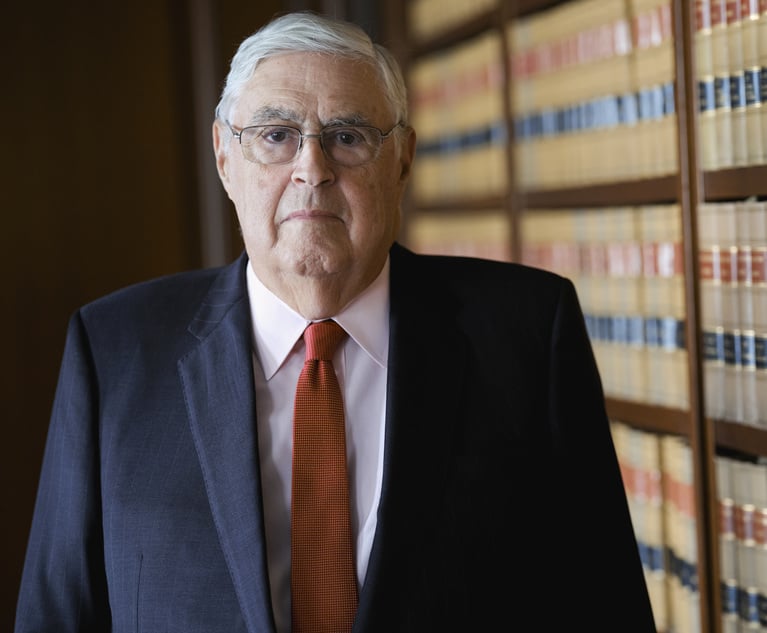
Alan Nevas 020909
Ned Gerard/Connecticut Post
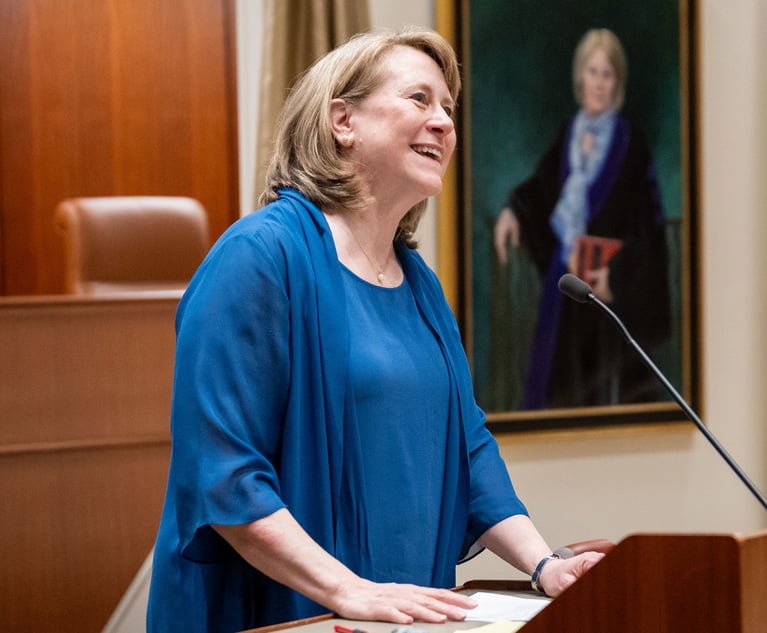
Connecticut U.S. District Judge Alan H. Nevas stepped down from the federal bench after 23 years. ‘If Congress doesn’t rectify the [pay] problem, you may see younger judges leave the bench and go back to private practice.’

Retiring Judge Shines Light On Pay Issue

Some say stagnant salaries will lead to turnover on federal bench

In today’s economy, with the unemployment rate soaring toward 8 percent, it’s hard for many people to sympathize with a federal judge who is dissatisfied making $169,000 a year. But compare that salary with what many others in the legal community earn, and it’s easier to understand the griping.

According to the administrative office of the U.S. Courts, which oversees the federal judiciary, a senior law school professor makes double what a U.S. District Court judge earns and a law school dean makes triple that amount. And for a partner at a prestigious law firm, the sky’s the limit.

The one job that has traditionally stayed equal in salary to a federal court judge is a member of Congress. But that changed this year when lawmakers gave themselves a 2.8 percent cost of living adjustment (COLA). And to add insult to injury, all other federal employees -- except judges -- got a 3.8 percent COLA.

“That was disgraceful,” said former Connecticut U.S. District Court Judge Alan H. Nevas, who served on the federal bench for 23 years but stepped down Jan. 30, in part because of the COLA snub.

A pay increase “is a hard sell for the public because the average person looks at that and thinks, ‘What a greedy person he is’,” Nevas told the Law Tribune. “Everything is relative.”

Nevas will start working this month as special counsel for Levett Rockwood PC in Westport, where he resides. “I don’t want to be remembered for leaving the bench because I was upset over pay,” said Nevas. “Salary was one of [the reasons] but not the driving factor.”

‘Rubbing Salt’

Nevas’s retirement announcement got plenty of attention in Connecticut legal circles. But he’s hardly the only one complaining. In fact, there has been widespread grumbling over the past several years now that the salary scale for federal judges is too low.

Just last month, attorney Christopher Landau, of the Washington, D.C. office of Kirkland & Ellis, filed a lawsuit against the U.S. government on behalf of seven federal judges upset at the failure to get COLAs when all other federal employees received them. “That was like rubbing salt in the wound,” said Landau.

Meanwhile, the administrative office of the U.S. Courts is still lobbying Congress to retroactively pass the COLA for federal judges.

The nation’s 680 or so district court judges are paid $169,300 a year, have lifetime job security and can retire at full salary at age 65 if they have 15 years on the job. A U.S. appeals court judge earns $10,000 more. A Supreme Court justice makes about $30,000 above that.

Nevas explained that because he has long been eligible for full-pay pension, without annual raises he was essentially working for free. “I worked for nothing, because if I left I would’ve received the same as I was getting,” Nevas said.

But Nevas said he loved being a federal judge and that’s what kept him going. However, he worries about whether top legal minds will want to become – or remain -- federal judges given the current pay scale. “If Congress doesn’t rectify the problem, you may see younger judges leave the bench and go back to private practice,” said Nevas.

Landau, who filed the lawsuit on behalf of four district court judges and three circuit court judges, none of whom are from Connecticut, agreed.

“That’s the underlying problem,” Landau said. “Judges, when they’re seeing their law clerks go into law firms and earning more than [the judges] within a year or two, that really makes them feel like they’re not being adequately compensated.”

And that, in turn, leads to turnover on the bench. For example, former Attorney General Michael Mukasey, who retired as a federal judge in 2006 after 18 years, made nearly $2 million in the next 21 months at a New York law firm.

“If being a judge is something they do for a few years, that’s not ideal,” said Landau. “Are we going to get the same quality of judging if judges have one eye on whether they might be leaving the bench?”

Landau’s lawsuit, Peter H. Beer et. al v. United States of America, claims that pay increases for judges are promised in the U.S. Constitution. Landau, in his complaint, cites Article III of the Constitution. “Compensation… shall not be diminished during their continuance in office.”

Landau said the federal government isn’t required to give anyone a cost of living increase, but “judges are supposed to get the COLA whenever federal civil servants get one.” He said without a pay boost, judges’ salaries are actually “diminished” because their take-home pay doesn’t keep pace with living expenses.

This isn’t the only year that judges did not get COLAs. It happened in 2007 and during the mid- and late-1990s. The government has until March 17 to respond to the lawsuit.

Other Departures

Current U.S. District Court judges in Connecticut referred comment for this article to the administrative office of U.S. Courts in Washington D.C.

David Sellers, the assistant director of public affairs, said it’s simply a matter of “fairness.” He said the court system has already lost other prominent district court judges around the country due to the lack of salary increases.

When considering raises, Sellers said judges “are mindful of the current economic climate” but “at least hope they get the cost of living adjustments other government employees get.”

Sellers said lawmakers seem to publicly support their cause but that has yet to turn into action. Connecticut U.S. Sen. Joseph Lieberman is among those who have voiced concern.

“[Lieberman] is very concerned that if these increases are not passed, our nation may lose some of its most talented members of the judiciary,” said Scott Overland, a press secretary. “The senator is committed to working with his colleagues in the Congress to ensure that a fair cost of living increase is approved for our hard-working members of the bench.”

But not everyone feels that way. Lawmakers from states with lower costs of living are more likely to question the need for judicial raises, because $169,000 is considered a much higher salary in Montana, for instance, than in Connecticut.

Even some members of the legal community believe federal judges are fairly compensated. “Existing judges could make more money if they retire, maybe three to four times their salary, and yet they don’t retire in great numbers,” said University of Chicago law professor Eric Posner.

His father, Richard Posner, is a judge on the 7th U.S. Circuit Court of Appeals in Chicago, and is also skeptical of the need to increase pay. “For many people, it’s more rewarding and less stressful to be a judge,” said the younger Posner.•

 |  About Law.com  |  Customer Support  |  Reprints  |  Privacy Policy  |  Terms & Conditions
 |  Copyright 2009. ALM Media Properties, LLC. All rights reserved.