ctlawtribune.com


Liquor Law:
Trendowski & Allen

Dental Law:
Meehan, Meehan & Gavin

ERISA Law:
Moukawsher & Walsh

Western Massachusetts

Alekman DiTusa

Business Litigation:
Hurwitz, Sagarin, Slossberg & Knuff LLC

Securities Arbitration:
Law Offices of Howard Rosenfield

Professional Responsibility Law:
Howard, Kohn, Sprague & Fitzgerald

Litigation:
Stanger & Arnold
info@stangerlaw.com

Immigration Law:
Leete Kosto & Wizner LLC

Child Sexual Abuse Defense:
Law Offices of Damon Kirschbaum

Monday, June 1, 2009

Images

Casey_Mary_060109
Gary Lewis
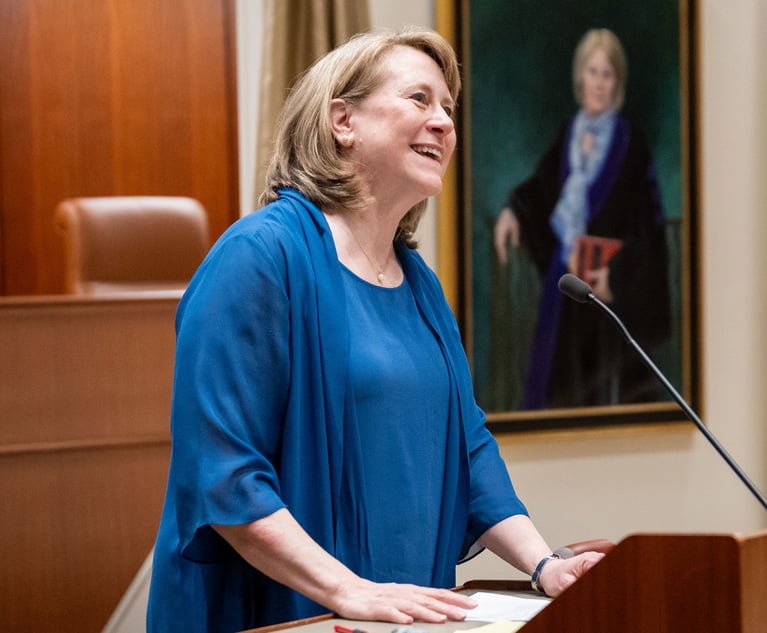
Hartford’s Mary Anne Casey, vice president of a national group called Professional Bail Agents of the United States, said unscrupulous bail bondsmen who offer discount rates are creating a ‘public safety issue that needs to be addressed.’

Paying A Price For Dishonest Bail Bondsmen

Cost-cutting tactics put dangerous defendants on streets

In this tough economic climate, everyone is looking for an edge over the competition. That includes businesses that provide bail bonds to criminal defendants.

But while it might be OK for furniture shops to offer sales on sofas and restaurants to offer deals on meals, public safety experts say it’s a huge problem when bail agents – often called bail bondsmen – charge criminal defendants discounted rates.

The legislature is considering a measure that would increase state oversight of private bail bondsmen, a step lawmakers hope would cut down on a practice known as “undercutting.”

While undercutting helps bail bondsmen gain a competitive advantage, it also lets people arrested for dangerous crimes out on the street for relatively little money.

“If the public knew half of what is going on, they’d be appalled,” said Mary Anne Casey, proprietor of Casey Bail Bonds in Hartford and senior vice president of a trade group called the Professional Bail Agents of the United States. “It’s a real public safety issue that needs to be addressed.”

Casey said lives have been lost because defendants have gotten out on bonds issued at discount prices by crooked bondsmen. As a prime example, she pointed to the Russell Peeler Jr. case. Peeler had been arrested for taking part in a drive-by killing in Bridgeport. Freed on bail, he killed two witnesses in the case – a 30-year-old woman and her 8-year-old son in 1999.

A judge had set Peeler’s bail for the drive-by shooting at $900,000. State statutes call for a defendant to pay a premium of 10 percent on the first $5,000 and 7 percent on the remainder. Using that formula, Peeler should have had to pay more than $63,000 to get out of jail. Instead, friends later told authorities, they paid a bondsman with $50,000 cash wrapped in a towel.

Peeler is now on Connecticut’s death row for the murders of the boy and his mother.

Anything Goes’

In a more typical case, when a judge sets bail at $10,000, a defendant is supposed to pay a premium of $850. But Casey said defendants are often “accosted by bail agents” outside of the courtroom who promise that “whatever they’re offering, I’ll do it for less.”

“People are getting out for $100, $200, anything goes and no one is stopping it,” said Casey. She said defendants with $100,000 bail are getting out for as little as $1,000. “All day long and there is nothing in statutes to prevent that.”

State Insurance Commissioner Thomas R. Sullivan, whose department oversees bail bondsmen, told the General Assembly’s Insurance and Real Estate Committee that undercutting is difficult to prove, especially when the discounted prices are paid in cash.

“The department continues to be frustrated in its efforts to regulate undercutting because there is never going to be a complaining witness – as the only witness, the defendant, has no reason to complain since they paid less for the bond than what was owed,” said Sullivan.

A bill passed out of the Insurance and Real Estate Committee would require bail bondsmen to remit the entire premium to the bail bond underwriter or surety company that actually bears the risk and loses money if the defendant flees. The bondsmen would later receive their commissions. Currently, bondsmen take their cut off the top first and submit the remainder of the premium to the surety company.

State Rep. Michael Lawlor, co-chair of the General Assembly’s Judiciary Committee, said his committee has discussed the problem, but he believes the measure approved by the insurance committee has the best chance for passage. That bill was still awaiting action by the House late last week.

“It increases the oversight of the Insurance Department over the bail bondsmen. I would prefer a stronger version but it’s a step in the right direction,” Lawlor said.

Casey said she is pleased lawmakers are beginning to address the problem, but she’s still disappointed that undercutting would not result in criminal charges under the proposed bill. •

 |  About Law.com  |  Customer Support  |  Reprints  |  Privacy Policy  |  Terms & Conditions
 |  Copyright 2009. ALM Media Properties, LLC. All rights reserved.