ctlawtribune.com


Liquor Law:
Trendowski & Allen

Dental Law:
Meehan, Meehan & Gavin

ERISA Law:
Moukawsher & Walsh

Western Massachusetts

Alekman DiTusa

Business Litigation:
Hurwitz, Sagarin, Slossberg & Knuff LLC

Securities Arbitration:
Law Offices of Howard Rosenfield

Professional Responsibility Law:
Howard, Kohn, Sprague & Fitzgerald

Litigation:
Stanger & Arnold
info@stangerlaw.com

Immigration Law:
Leete Kosto & Wizner LLC

Child Sexual Abuse Defense:
Law Offices of Damon Kirschbaum

Monday, June 29, 2009

White Firefighters Win Reverse Discrimination Case

High court says New Haven erred in tossing out promotional test results

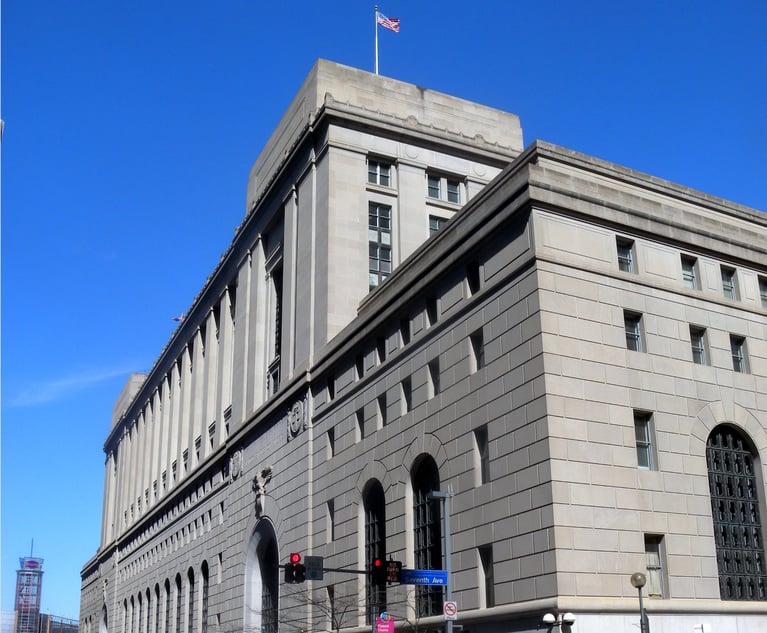
Jubilant New Haven firefighters gathered on the steps of the city’s federal courthouse Monday afternoon to celebrate a U.S. Supreme Court ruling that seems likely to alter the legal landscape pertaining to race-based hiring and promotion initiatives.

A divided court handed white New Haven firefighters a clear-cut victory, stating that the city was wrong to throw out the results of a 2004 promotional exam in which no black applicants scored well enough to win captains’ or lieutenants’ positions.

The city said it acted to pre-empt possible claims that the exam had a “disparate impact” on minorities in violation of Title VII of the Civil Rights Act of 1964. Instead, 19 white firefighters and one Latino who scored high on the test filed suit, saying that the decision violated the same law's prohibition on intentional discrimination.

The plaintiffs persevered even after a U.S. District Court judge in Connecticut and the 2nd Circuit Court of Appeals ruled against them. On Monday, five of the nine U.S. Supreme Court justices agreed that New Haven violated the civil rights law by discriminating against the white firefighters.

“It was worth every minute of” the long legal battle, said Frank Ricci, a white firefighter and the name plaintiff in Ricci v. DeStefano. Ricci, who is dyslexic, scored high enough for a promotion after paying a friend $1,000 to make audiotapes of the promotional test materials. “This is a victory for the New Haven Twenty and for all Americans.”

The lead counsel for the plaintiffs, New Haven civil rights attorney Karen Lee Torre, is a columnist for the Law Tribune. Flanked by her 20 clients on Monday afternoon, Torre said the decision sends a message that “cities can’t bow to pressure and lobbying,” as the plaintiffs contend New Haven did in throwing out the promotion exam results.

Torre said the group will seek “the full package of rights and remedies that these men are entitled to,” but did not offer specifics.

“The justice they sought was delayed, but they’re finally going to get it,” said Torre. “In this very long, arduous process, these men became a symbol for millions of Americans who have grown tired of seeing individual achievement and merit take a back seat to race and ethnicity.”

New Haven Mayor John DeStefano told reporters he expects the case to land back in the courtroom of U.S. District Judge Janet Bond Arterton, who granted summary judgment to the city in 2006. DeStefano, who took pains to say he understood the frustrations of both white and black firefighters, predicted that the city would end up “in some fashion” certifying the list of top scorers in the 2004 promotional exams.

Lt. Matt Marcarelli also spoke at the firefighters’ news conference. He was the high scorer on the captain’s exam, and has been working as an “acting captain” for the six years since—and resenting what he said felt like job discrimination. “The true vindication is the day we are all pinned our badges, captain and lieutenant.”

‘Impermissible’

Justice Anthony Kennedy wrote for the 5-4 majority.

“All the evidence demonstrates that the city rejected the test results because the higher scoring candidates were white,” Kennedy wrote in an opinion joined Chief Justice John G. Roberts Jr. and Justices Antonin Scalia, Clarence Thomas, and Samuel Alito. "Without some other justification, this express, race-based decision-making is prohibited.”

The majority went on to say that the mere fear of litigation “cannot justify an employer's reliance on race to the detriment of individuals who passed the examinations and qualified for promotions…

“We conclude that race-based action like the city’s in this case is impermissible under Title VII unless the employer can demonstrate a strong basis in evidence that, had it not taken the action, it would have been liable under the disparate impact statute.”

New Haven failed to meet its burden of proof, the majority concluded.

Justice Ruth Bader Ginsberg issued an extensive dissent, tracing the history, developments and objectives of Title VII of the Civil Rights Act.

When analyzing race discrimination claims, “context matters,” wrote Ginsberg, who was joined by Justices John Paul Stevens, David Souter and Stephen Breyer. The four justices expressed sympathy for the white firefighters, but concluded that “they had no vested right in promotion.” They were not harmed, the dissenters argued, when the city decided to disregard the test results, Ginsburg and the others stated.

The four dissenters said the majority engaged in a “pretension” that the test was thrown out by New Haven because the top scorers were white, and ignored the real reason – that the test was unfair. Ginsburg wrote that other cities use much fairer testing programs than New Haven’s written exam, which was purchased for $100,000 from an Illinois consultant. The dissenters predicted that the majority ruling in this case “will not have staying power.”

The ruling was eagerly anticipated in Connecticut and elsewhere for its potential impact on diversity programs in both the public and private sectors. In the aftermath, legal experts said the decision could alter employment practices nationwide and make it harder to prove discrimination when there is no evidence it was intentional.

The case was also viewed as a referendum of sorts on Supreme Court nominee Sonia Sotomayor. Judge Arterton’s initial ruling against the city was upheld by a 2nd Circuit panel which included Sotomayor. The 2nd Circuit affirmation was in a routine, unsigned “per curiam” opinion which did not deeply analyze Arterton’s decision.

Sotomayor has been criticized for not writing more and it seems certain that conservatives will use the Supreme Court’s reversal to oppose her nomination. However, she was not the senior justice on the 2nd Circuit panel, and was not in charge of determining how the matter would be handled, her colleagues have said.

Harsh History

Ginsberg’s dissent traced the difficult history of minorities attempting to gain a presence in the ranks, and brass, of municipal fire departments. It quoted from the 1975 case of New Haven Firebird Society v. New Haven, in which New Haven civil rights lawyer David Rosen represented the plaintiffs.

On Monday, Rosen said the Ricci case has “changed the rules.”

“A broad road reading of the case would be that the Supreme Court has eviscerated the disparate impact doctrine, with Justice Kennedy’s ruling that an employer needs a strong basis in fact [before throwing out a suspect test]. It’s setting the bar right up at the ceiling.”

Previously, said Rosen, “The rule always used to be that an employer who acted in good faith to reduce adverse impact [on minorities] is not violating the law, but rather following the law. Before, it was OK for an employer to try to minimize the adverse impact of a test or other selection device,” Rosen said.

For the full opinion in Ricci vs. DeStefano, see www.supremecourtus.gov/opinions/08pdf/07-1428.pdf

 |  About Law.com  |  Customer Support  |  Reprints  |  Privacy Policy  |  Terms & Conditions
 |  Copyright 2009. ALM Media Properties, LLC. All rights reserved.