Images

Law Tribune File Photo
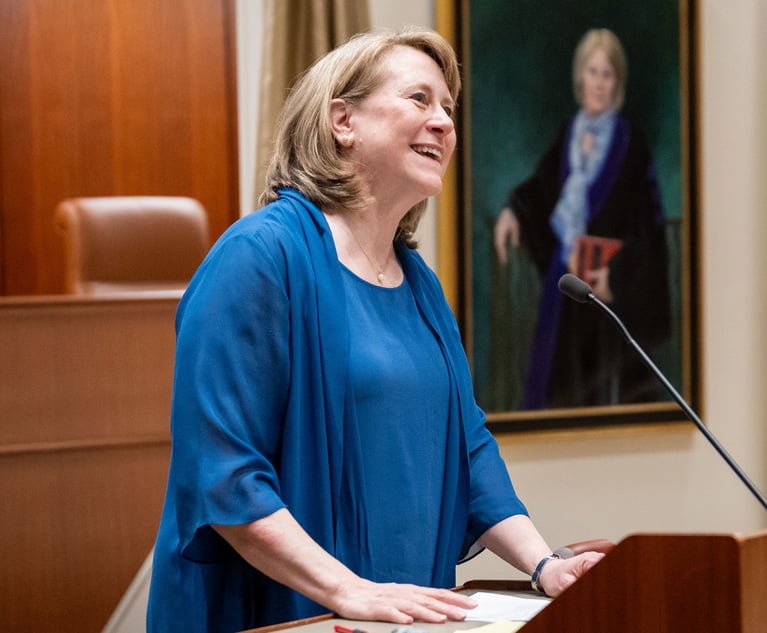
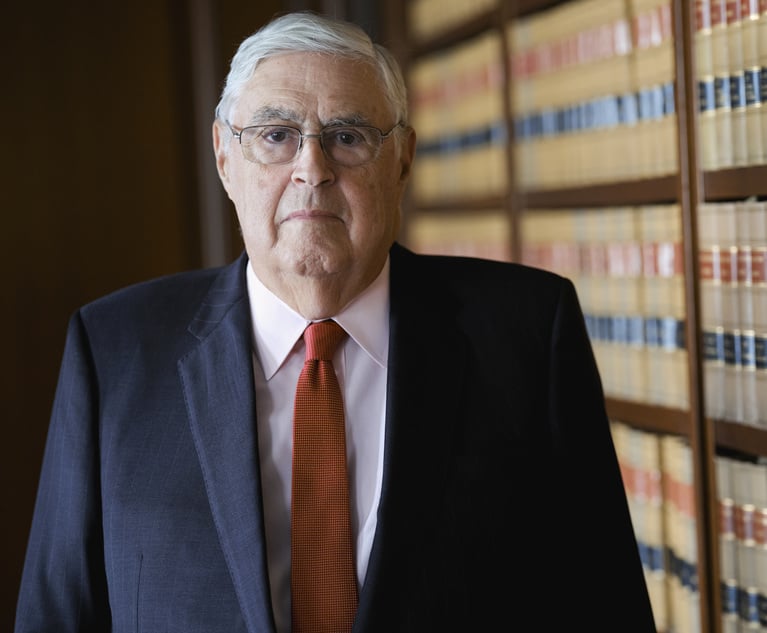
Attorney Steven D. Ecker says that judges may be able to compel alleged victims of domestic violence to testify at hearings on protective orders.
Domestic Violence Suspects Get Another Day In Court
Supreme Court endorses added hearing on protective orders
By CHRISTIAN NOLAN
People accused of domestic violence have a lot to lose. Not just their freedom, but the right to even visit their children.
That was the scenario for a Stamford man who was arrested two years ago for allegedly assaulting his wife. She said he threw her down a flight of stairs and kicked her in the head, all in front of their two toddlers.
But the defendant, Fernando A., whose full name is not released in court records, said the two were divorcing and his wife fabricated the attack story to gain leverage in family court proceedings. Fernando A., however, never got a chance after his arraignment to object to the order of protection issued against him that prevented him from seeing his children.
His lawyer, Steven D. Ecker, of Hartford’s Cowdery, Ecker & Murphy, asked for an evidentiary hearing after the arraignment, but Superior Court Judge James Bingham denied the request. Ecker challenged the denial up to the state Supreme Court.
In an opinion to be officially released this week, a divided court ruled that a defendant must be granted an evidentiary hearing at which the state must prove, by the civil standard of a preponderance of evidence, that the order of protection is a continued necessity.
“All we were asking for is a hearing within a reasonable time after someone is kicked out of their home and prohibited from any contact with their children,” said Ecker. “It seems appropriate a court would permit a hearing to consider both sides of the story. That doesn’t seem particularly controversial.”
There are about 19,000 protective orders currently in place in Connecticut. And in a year when domestic violence cases have repeatedly made headlines in the state, it’s no surprise that the Fernando A. appeal drew interest from various advocacy groups, including the Connecticut Coalition Against Domestic Violence and the American Civil Liberties Union of Connecticut.
“Victims should be protected,” said Anne C. Dranginis, of Hartford’s Rome McGuigan. “In many of these cases, victims have suffered trauma or fear and are trying to calm down children.”
‘Deterring Effect’
Dranginis filed an amicus brief on behalf of the Connecticut Coalition Against Domestic Violence arguing that the people who claim to be victims of domestic violence – most of whom are women – should not be subjected to cross-examination right after a spouse or partner has been arrested for beating them.
Dranginis said if women knew they would have to face their abuser in court a day or two after an arrest, that would have a “chilling, deterring effect” on abused spouses and partners bringing charges.
Conversely, the ACLU of Connecticut argued that there are people who get falsely accused of domestic violence and they deserve a chance to be heard before losing their rights, especially the right to visit their children.
In the end, the state Supreme Court issued a 5-2 ruling that all sides interpreted as at least a partial victory. But how it all shakes out in court from this point forward remains to be seen. What can be assured is that Fernando A. and future defendants facing similar orders of protection have the right to a hearing on the order of protection after their arraignment and before their trial.
“The defendant may… testify or present witnesses on his own behalf, and may cross-examine any witnesses whom the state might elect to present against him,” stated Justice Flemming L. Norcott Jr., who wrote the majority opinion. “This defense evidence, along with the comprehensive initial proffer and the submission of evidence by the state, further will ensure that there will be a record adequate to review…the trial court’s ruling with respect to the continued necessity of the criminal protective order.”
But at the hearing, the alleged victim may never have to testify, explained Senior Assistant State’s Attorney Robert J. Scheinblum. Prosecutors could essentially present the same evidence as at the arraignment – police reports, a sworn victim’s statement and the report and recommendation of a family relations officer – to get the order of protection continued by the judge.
Scheinblum’s view is that if prosecutors don’t call the alleged victim to testify, the defense has no right to cross-examination. He doesn’t think the ruling will “dramatically change the way protective orders are issued and continued,” said Scheinblum. “I think the judges will understand they have extremely broad discretion and can rely on the written materials and reliable hearsay to continue their order of protection and protect victims from domestic abuse.”
But Ecker’s take is that a judge does have the discretion to require the testimony of any witness, including the spouse or partner who claims to have been abused. Even children could be compelled to testify in some cases, said Ecker.
“There are some fraction of these complaints that are not valid,” said Ecker. “My sense is, in those cases where there’s any significant doubt, the court can require the complainant to testify. I think that’s the way it should work. Where there’s a doubt, they should testify.”
Justice Barry Schaller authored a dissent in a case he heard before his recent retirement from the court. Schaller noted that the majority decision said the hearing on the protection order should be held a “reasonable” period after a domestic violence arrest. Both Schaller and Scheinblum pointed to the ambiguous nature of that word.
Scheinblum predicted that defense lawyers would likely next challenge what is a reasonable amount of time, especially if court dockets are backed up in a particular courthouse. “What’s a reasonable period of time?” asked Scheinblum. “Could be two days, two weeks, two months, I don’t really know.”•