Images

Gary Lewis
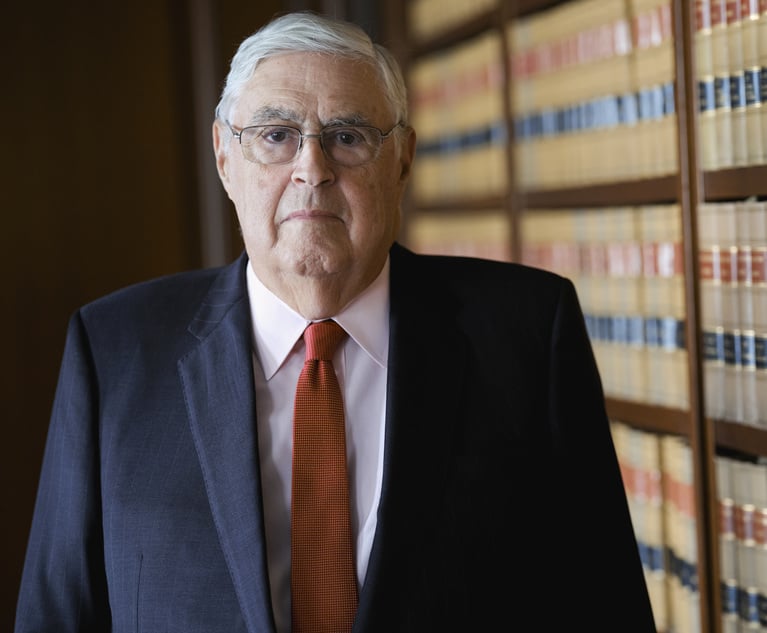
Hamden solo Gerline Fleury is going to churches where Haitians worship to spread the word about a federal program that gives undocumented Haitian immigrants the right to live and work in the U.S. for 18 months.

Law Tribune File Photo
Hartford attorney Andrew Wizner said it’s likely that Haitians allowed to work in the U.S. will help rebuild their country by sending a large portion of their wages to relatives back home.
A Hand For Haitians
Attorneys help immigrants apply to stay in America
By CHRISTIAN NOLAN
Hamden solo Gerline Fleury had to fight back tears when thinking about all the destruction in her parents’ homeland. “All my ancestors made incredible sacrifices so I could be born in the United States,” said Fleury. “Only by the grace of God I wasn’t in Haiti and in the earthquake.”
The mid-January earthquake has claimed as many as 200,000 lives, and Fleury’s mother, who now lives in Connecticut, has taken it very hard. Fleury said her mother tells her “the capital [Port-au-Prince] is so beautiful and I remember it from when I grew up. Some of the great landmarks that were there are not there anymore.”
Fleury has heard from relatives still living in Haiti. They lost their homes but otherwise were not hurt. Initially, her uncle was missing but she heard from cousins last week who reported that he was homeless but healthy. “My family is really OK, I think I’m very blessed,” said Fleury.
But Fleury realizes that in time there may be friends or distant relatives she and her parents may not hear from ever again due to the earthquake. “The pain she feels,” Fleury said of her mother, “she wishes she could help people but she can’t.”
Fleury, however, is trying to help in whatever way she can. Right now that means spreading the word to the Haitian community in Connecticut that Haitians visiting this country can apply to stay here rather than return to their ravaged homeland.
President Barack Obama announced last week that Haitians in the United States could apply for Temporary Protected Status (TPS) that allows them to live and work in the U.S. for the next 18 months.
TPS is typically authorized when a country is in crisis from a natural disaster or war. In the past, that’s included Honduras, Nicaragua, El Salvador, Sudan and Somalia.
The Department of Homeland Security said last month that there were 30,000 Haitian immigrants in America facing deportation prior to the earthquake. Nationally, officials expect upwards of 200,000 to be eligible for the TPS program. Those include both undocumented Haitian immigrants and those here on student or visitor visas that are about to expire.
After news of the TPS decision, Fleury went to the French Speaking Baptist Church in New Haven to spread the word. “Haitians are very religious people,” said Fleury. “The best way to get a hold of a bunch of them is through the church.”
Outpouring Of Volunteers
Meanwhile, members of the Connecticut chapters of the American Immigration Lawyers Association (AILA) and the National Lawyers Guild have teamed up to run clinics Feb. 6 in four cities statewide: Hartford, Norwich, Stamford and New Haven. A fifth clinic may be set up in Bridgeport.
Attorney Rita Provatas, of Provatas & McNamara in New London, has a large number of Haitian clients. Right after the earthquake, she reached out to them to ask how their families were doing but she knew there really wasn’t much help they could provide otherwise.
At least not until TPS was announced. “We thought, ‘Great. Finally, a tool. We can help,’” said Provatas, an officer in the state chapter of the AILA. “It’s a little frustrating when you have to say to your clients, ‘I’m sorry there’s nothing we can do for you.’”
Provatas said there’s been a “tremendous outpouring of volunteers” to help at the clinics. She said more than 80 lawyers, paralegals, and legal assistants will help.
Provatas, who will oversee the Norwich clinic, said volunteers will help immigrants fill out the TPS paperwork. When that’s finished, an immigration attorney will review the application to ensure eligibility. Anyone with a felony conviction or two misdemeanor convictions is immediately disqualified.
“It’s important for people to have attorneys review their case before it gets filed because immigration can be a bit of a minefield,” said attorney Jennifer S. Rodriguez of the Rodriguez Immigration Law Firm in Madison. “If you have an application for someone not eligible for benefits, you could be putting them in line to be removed from the U.S.”
Organizers expect roughly 50 to 100 Haitians at each clinic. But they acknowledge some will be reluctant to come.
“Should people be fearful of registering at all?” asked Provatas. “Can this then be used [by federal agents] as a laundry list of people who don’t have status in the U.S.? I’m getting that question a lot. My response is obviously there’s a risk to it, but the benefit far outweighs the risk if you’re eligible for TPS.”
Money Sent Home
Attorney Andrew Wizner, of Leete, Kosto & Wizner in Hartford, said it would go against public policy for U.S. Homeland Security officials to view the TPS program as a way to acquire names of undocumented immigrants. If used that way, he said, future immigrants whose homelands were hit by natural disaster or war would shun the TPS program.
One of the benefits of the program is that Haitians working in the U.S. will likely pay for part of the rebuilding of their home country. Wizner said statistics indicate that a large portion of the money earned by immigrants in the TPS program gets sent to family members in their home country.
Wizner also predicted that TPS status for the Haitians will eventually be extended beyond 18 months. He said for some countries, such as El Salvador and Nicaragua, which were wracked by years of civil war, it’s been extended for as long as 10 to 12 years.
“When you see a tragedy like this, everybody feels like, ‘I wish there was something I could do’,” said Rodriguez. “As an immigration attorney, we did make some lobbying efforts to get Homeland Security to issue the TPS designation for Haiti and as a local group, together with the Lawyers Guild, we can help people file these applications.”
Fleury, meanwhile, wishes she could do more and vows to visit Haiti at some point to visit her homeless relatives.
“For myself, I try not to think about it too much because I always end up crying,” said Fleury. “The only way to deal with the helplessness I feel is to try to get involved.” •
On Feb. 6, free legal clinics will be held for Haitian immigrants in at least four Connecticut cities. To volunteer, or for more information, visit ctlawyers4haiti.wordpress.com.